

City of Seattle Awards Grants to Help Reduce Climate Pollution in Affordable Housing, Community, and Nonprofit Buildings
Today, our office announced $4.6 million in Building Decarbonization Grants to nine awardees. The grants will help affordable housing providers and owners of community-serving buildings complete engineering design or retrofit projects that reduce climate pollution and create safer, healthier, and longer-lasting buildings for families and frontline communities.
“Affordability and climate action go hand in hand in creating a Seattle where everyone can thrive,” Mayor Katie Wilson said. “By helping building owners modernize and reduce climate pollution, we’re improving daily life with healthier air, safer homes, and lower energy bills. These upgrades matter most for people who feel climate impacts first, including families living on tight budgets, people sensitive to heat and smoke, and communities facing the greatest environmental and economic pressures. These grants are critical to building a climate-ready city grounded in affordability and community strength.”
In Seattle, buildings are responsible for 41% of greenhouse gas emissions, which worsen climate change impacts like extremely hot days, unhealthy air quality, and dangerous weather. This funding helps building owners prepare for future emissions reduction targets set by Seattle’s Building Emissions Performance Standard (BEPS) law, under which most large buildings will need to reach net-zero emissions by 2050.
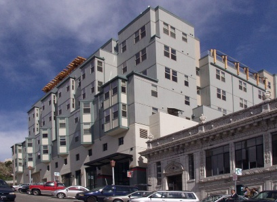
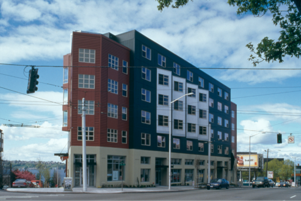
This year’s buildings include affordable housing, historic structures, multifamily housing, nonprofit houses of worship, and a hospital research laboratory. In alphabetical order:
-
Brighton Communities ($540,000):
- Building: Brighton Apartments in the Brighton neighborhood in the Rainier Valley, operated by a nonprofit, with 124 affordable apartments for seniors.
- Project: Retrofit to replace gas-fueled heating, cooking, and hot water equipment with electric alternatives across all 124 units. This work builds on findings from a pilot project to eliminate pollution from a test apartment, funded by the 2024 Building Decarbonization Grants.
-
Downtown Emergency Service Center (DESC) ($300,000):
- Building: The historic Morrison Hotel, affordable housing apartments run by a nonprofit in Pioneer Square that provides permanent housing and support services to formerly homeless adults with disabilities.
- Project: Retrofit to replace gas-fueled ventilation units with heat pumps for 190 apartments and corridors. The project also includes installing electrical infrastructure to transition common laundry room equipment off gas.
-
Gables Cooperative Association ($160,000):
- Building: The Gables Cooperative, a historic nonprofit building on Capitol Hill, now home to 34 units of resident-run shared living.
- Project: Engineering design plan to replace gas-fueled hot water and space heating systems with electric heat pumps.
-
Interim Community Development Association (InterimCDA) ($450,000):
- Building: Nihonmachi Terrace Apartments, a 50-unit apartment building in the Chinatown-International District operated by a nonprofit that offers affordable housing to families with low incomes.
- Project: Retrofit to replace gas-fueled boilers that provide hot water and space heating with an electric central heat pump.
-
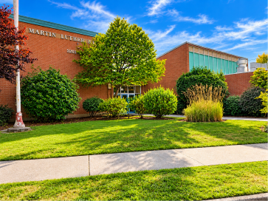
Martin Luther King Jr. Family, Arts, Mentoring, and Enrichment (FAME) Community Center ($218,734):
- Building: MLK FAME Community Center in Madison Valley, a historic former elementary school that now serves as a nonprofit cultural center and community gathering space.
- Project: Engineering design plan for replacing gas-fueled hot water and heating equipment with heat pumps, replacing gas kitchen ranges with electric, and installing heat pumps in the corridors and gym.
-
Plymouth Housing Group ($2,000,000):
- Building: Plymouth Place in Belltown, a nonprofit apartment building that provides permanent housing and support services to people experiencing homelessness.
- Project: Engineering design and retrofits to replace gas-fueled hot water and heating systems with a central heat pump plant.
-
Saint Mark’s Cathedral ($148,000):
- Building: A nonprofit and historic place of worship and community gathering space in the Eastlake area.
- Project: Retrofit to replace a gas-fueled boiler with a new in-floor heating system powered by an electric heat pump. The project also includes installing energy recovery systems to provide heating, cooling, and ventilation in the community space.
-
Seattle Children’s Hospital d/b/a Seattle Children’s Research Institute ($500,000):
- Building: Jack R. MacDonald Building, a laboratory in downtown Seattle operated by a pediatric research nonprofit studying cures for childhood diseases.
- Project: Retrofit to replace two gas-fueled boilers with a heat pump system that provides primary space heating. This follows a 2025 grant that helped the organization assess and make a plan for reducing emissions.
-
University Congregational United Church of Christ ($292,000):
- Building: A 70-year-old nonprofit church and community gathering space in the University District.
- Project: Retrofit to replace gas-fueled heating equipment with a heat pump and upgrade the building’s HVAC control system.
This cycle, OSE received 53 applications requesting nearly $26 million in funding — $8 million more than funding requested in 2025. Funding comes from Seattle’s Jumpstart Payroll Expense Tax. The Mayor’s proposed budget includes funding to award grants again in 2027.
Building Decarbonization Grants are part of OSE’s Seattle Building Emissions Navigator program that offers free technical and BEPS customer services to owners of buildings over 20,000 square feet. Six of the 2026 grant recipients are graduates of a Navigator group training cohort. This is Seattle’s third year awarding these grants, building on the success of previous funding cycles and feedback from building owners and partners.
“This investment from Seattle’s Office of Sustainability & Environment means Rainier Valley families will breathe cleaner air, pay lower utility bills, and live in homes built for the climate ahead, not the one behind us,” said Curtis Brown, founder and executive director of Brighton Communities, a second-time awardee. “By replacing fossil-fuel systems with heat pumps and heat pump water heaters, we’re proving that decarbonization and anti-displacement are the same fight. We’re grateful to OSE for betting on a community that has too often been last in line for climate investment and is now leading it.”
Seattle’s work to eliminate pollution from City-owned buildings and support building owners to do the same is one of the priorities of the upcoming Climate Action Plan. The plan is being developed with hundreds of partners, including Building Decarbonization Grant awardees, and will underscore that solutions must happen at all scales. Together, individuals, communities, businesses, and government will build a healthier Seattle for all.
“Our city is making real progress reducing climate pollution from buildings, and BEPS helps keep us on that path,” OSE Director Lylianna Allala said. “The standard gives building owners flexibility to meet targets over time, and our team walks alongside them with customized support, funding, and long-term partnership. This work helps owners make improvements people feel every day — cleaner air, more efficient homes, and longer-lasting community spaces. These upgrades also move us toward the goals in our Climate Action Plan, where cleaner buildings are central to creating a resilient, affordable Seattle for everyone.”
Despite being the second-largest source of pollution in Seattle, our recent emissions inventory showed a 14% decrease in building emissions from 2022 to 2024. BEPS was not yet reflected in the inventory but is projected to cut building-related emissions roughly 27% by 2050 through a single policy. OSE is leading the development of the Climate Action Plan, which will serve as the City’s five-year plan to accelerate emissions reduction while improving climate-readiness, health, and well-being.
“Nihonmachi Terrace is home to 50 very low-income households, many of them immigrant and refugee families, in a Chinatown-International District census tract that scores 10 out of 10 across all five of the state’s environmental health and vulnerability measures,” said Leslie Morishita, co-executive director of InterImCDA, a first-time awardee. “One of the original gas boilers has permanently failed, and the other is in critical condition, leaving residents’ heat and hot water with no backup. This OSE grant fully funds our heat pump retrofit, eliminating roughly 90 percent of the building’s gas use. It means reliable heat and hot water, long-term affordability, and a clear path to full decarbonization.”
Seattle is leading the way by reducing pollution in City-owned buildings. More than 25 buildings out of the 175 City-owned buildings in the Municipal Buildings Decarbonization Plan are now fully electric, and the rest will become fully electric and emissions-free by 2042. Track Seattle’s progress on the Municipal Buildings Decarbonization Dashboard and learn how Seattle is reducing pollution in complex City-owned buildings, from the Seattle Aquarium to historic libraries, on OSE’s blog.
Legal Disclaimer:
EIN Presswire provides this news content "as is" without warranty of any kind. We do not accept any responsibility or liability for the accuracy, content, images, videos, licenses, completeness, legality, or reliability of the information contained in this article. If you have any complaints or copyright issues related to this article, kindly contact the author above.
