

Ketamine increases neuroplasticity in female mice but not in males
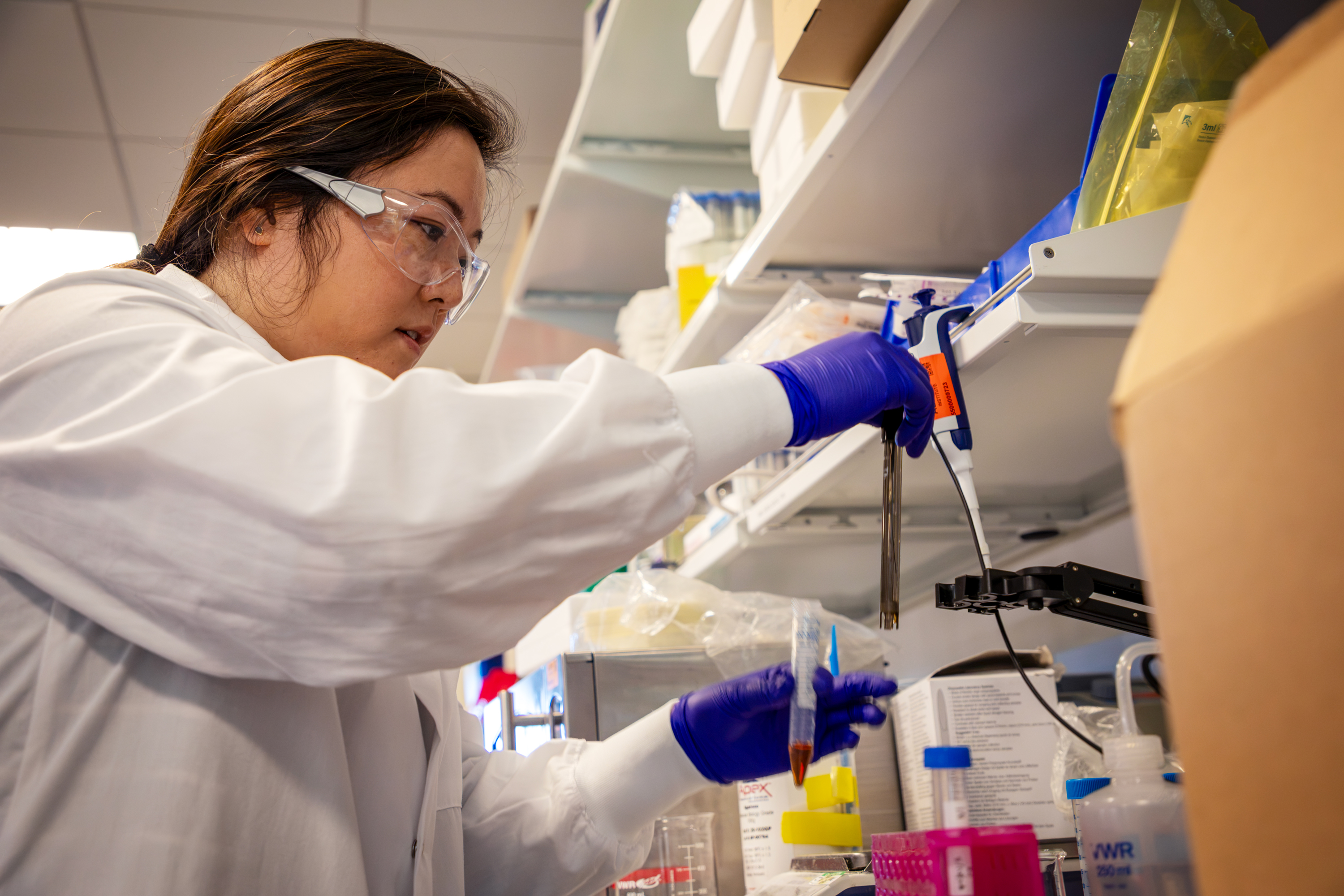
Kelly Jin, scientist at the Allen Institute
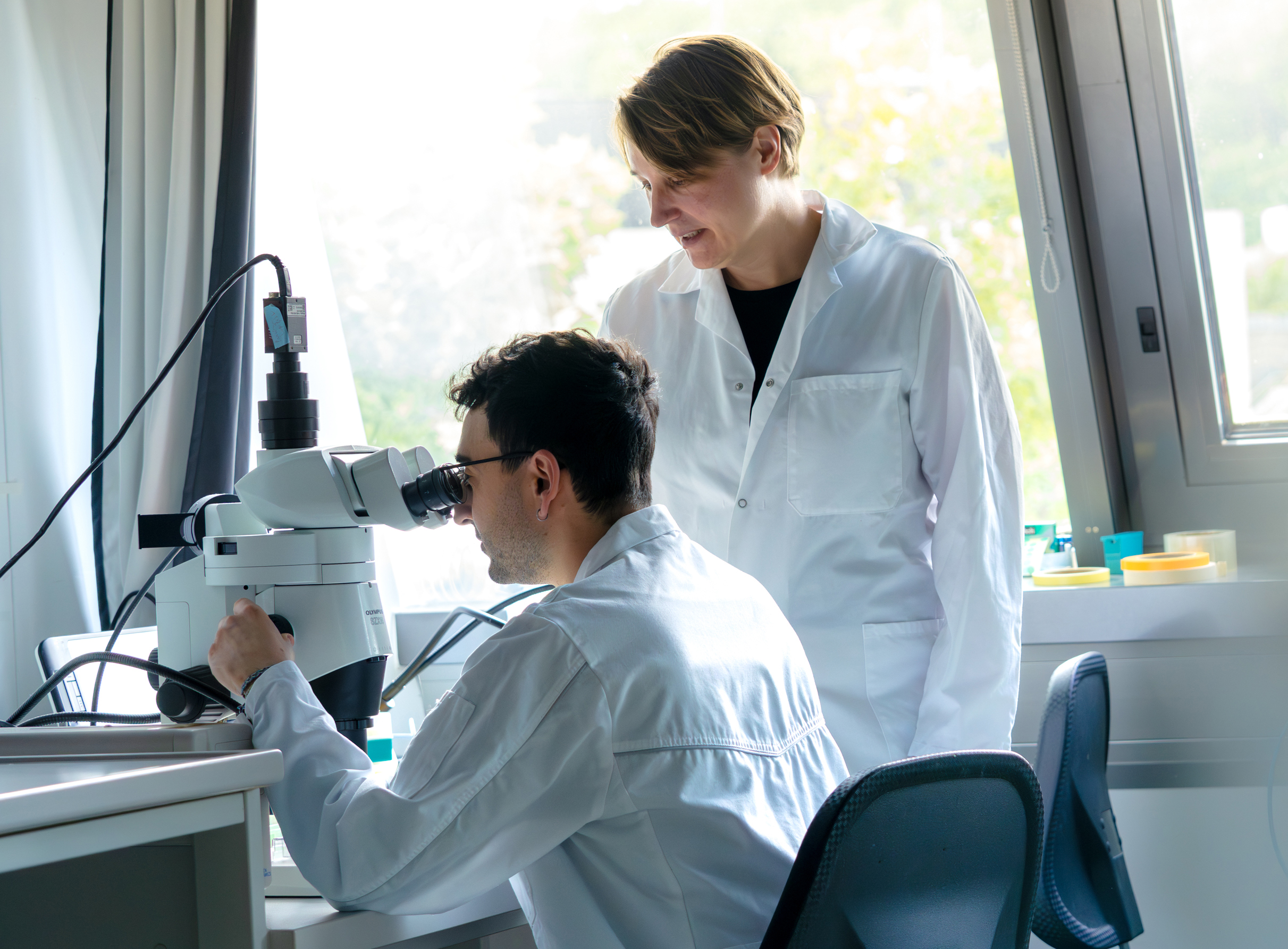
Alessandro Venturino and Sandra Siegert, scientists at the Institute of Science and Technology Austria (Photo credit: Siegert group ISTA)
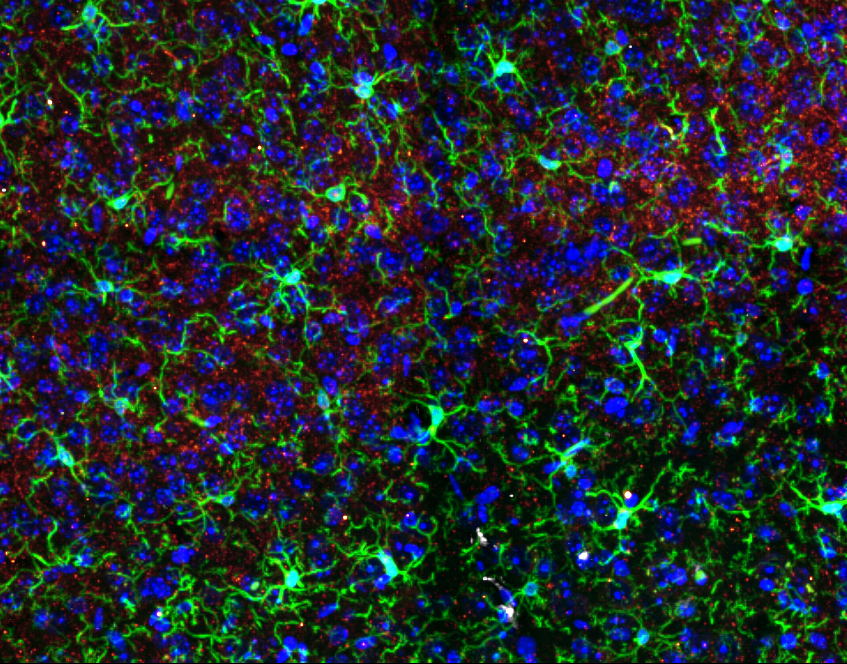
Distribution of microglia (green) across the different cortical layers (orange) in the mouse visual cortex (Photo credit: Siegert group ISTA)
The surprising finding could help scientists develop better treatments for depression
Researchers at the Institute of Science and Technology Austria, in collaboration with scientists at the Allen Institute, discovered that when female mice are recovering from a single ketamine sedation, their brains become much more active than their male counterparts, specifically their microglia. These specialized brain cells began reaching out with their branch-like arms to intermingle with surrounding brain cells. This increased activity led to the removal of the extracellular matrix—the proteins and molecules surrounding, supporting, and giving structure to cells—and created space that allowed new synapses to form and remodel the neural network, thereby increasing neuroplasticity. Researchers didn’t observe this behavior in male mice.
“We didn’t expect to see this; it was a surprising finding,” said Sandra Siegert, professor at the Institute of Science and Technology Austria and senior author of the study. Microglia are the brain’s defense system—immune cells that help clear debris, trigger inflammation to protect the brain, and maintain optimal brain function.
[A pathway to neuroplasticity]
Importantly, scientists uncovered the precise pathway of this increased neuroplasticity: during recovery from ketamine anesthesia, corticosterone spiked in the blood. Corticosterone is an important hormone that helps animals respond to stress. This hormone triggered microglia to turn on the Fkbp5 gene, which then produces the FKBP51 protein. This protein in turn activated the microglia to start intermingling with surrounding neurons, which eventually led to an increase in neuroplasticity. Scientists at the Allen Institute performed single-nucleus RNA sequencing to help uncover this hidden pathway and reveal the specific gene that was turned on in female mice but not in males.
Neuroplasticity is a delicate balance: too much or too little has both been linked to neuropsychiatric disorders. “Understanding how to balance good plasticity versus maladaptive plasticity is very important for healthy life, healthy aging, and neuropsychiatric diseases,” said Bosiljka Tasic, Director of Molecular Genetics at the Allen Institute and one of the study co-authors. “How can you modify and modulate this plasticity but in a positive way? Many of the major plasticity-inducing drugs have become quite interesting, especially as treatments for depression, but we still don’t know how they work.”
The new research reveals that at least in female mice, the FKBP51 protein can be a lever to pull in order to regulate neuroplasticity in the brain, and that ketamine can be one way to pull this lever. The findings, if fully replicated in humans, point to the importance of sex differences when evaluating the effects of drugs and treatments. “How drug effects differ between males and females is important to know in order to offer the best treatment,” said Siegert.
In immunology, it is known that immune cells respond differently between males and females, which can lead to different outcomes in infectious diseases. “Microglia, which have capabilities similar to macrophages, are not necessarily excluded from this assumption,” said Siegert. “It is only now that scientists are exploring this topic.”
Peter Kim
Allen Institute
+1 206-605-9884
email us here
Legal Disclaimer:
EIN Presswire provides this news content "as is" without warranty of any kind. We do not accept any responsibility or liability for the accuracy, content, images, videos, licenses, completeness, legality, or reliability of the information contained in this article. If you have any complaints or copyright issues related to this article, kindly contact the author above.
