

Collaborations advance transportation research
ITD recently played host in Boise (along with New Mexico and Washington State DOTs) to the Western Transportation Research Consortium pooled fund meeting and peer exchange. The event brought together more than a dozen western state DOT research programs to discuss regional collaboration, emerging technologies, research implementation practices, and collaborative research, including six recently completed projects and seven projects selected to begin in 2026.

The meeting emphasized cooperation among state DOT research offices, providing ITD with the opportunity to showcase our efforts across key themes and topics while gaining insights from other DOTs.
The peer exchange included collaborative discussions among participating DOTs on emerging technology trends, implementation barriers, successful practices, and future opportunities for innovation in transportation research programs. Attendees participated in roundtable discussions to identify strengths, opportunities, and ideas for ITD to bring back and apply within ITD’s program.
Mike Copeland from ITD’s Construction and Materials Section presented “RARE: Building Reusable Research Capacity with AI,” a FFY27 funded research project. RARE focuses on using AI to conduct some or all components of research projects where appropriate, with the goal of reducing costs and freeing up funding for projects that require traditional research methods or are not suitable for AI-based approaches. Mike opened the discussion by noting, “Too many research needs. Not enough SPR funds. Sound familiar?” to highlight the challenge of prioritizing competing research needs. He also discussed how artificial intelligence can support transportation research programs through improved efficiency, data analysis, and streamlined workflows.
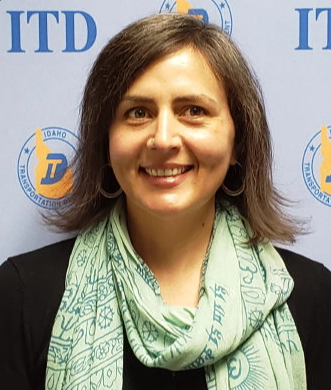
ITD Research Program Manager Amanda Laib also presented on “The Anatomy of Successful Implementation.” The presentation underscored the importance for research projects to be designed with practical implementation in mind throughout the project lifecycle. Amanda also outlined ITD’s approach for engaging subject matter experts (SMEs) and ETS staff early in the research proposal process to determine appropriate involvement before projects begin, with the goal of improving the likelihood that research results can be successfully adopted into agency operations.
The consortium also enables collaboration on shared research priorities and broader research coordination efforts. Through the WTRC pooled fund, participating western states have jointly funded research projects and initiatives that address common transportation challenges and support regional knowledge sharing.
Julie Hausknecht from ITD Environmental Section and John Arambarri from ITD Construction and Materials Section contributed to research submittals for the 2025 cycle.
WTRC Research Projects
2025 (In Progress or Completed):
Vicky Calderon from ITD Roadway Data Section and Ester Ceja from ITD Environmental Section contributed to research submittals for the 2026 cycle.
2026 (Upcoming):
- Synthesis Research – Traffic Monitoring Guides and Strategic Plans (Championed by ITD)
- NEPA Process – Purpose and Need Training Development (Championed by ITD)
- Expanded Study for Automated Interpretation of Culvert Inspection Videos Using Artificial Intelligence and Computer Vision
- National Research Proposal Solicitation Distribution List
- Leveraging Emerging Technology to Improve Communication of Research Results
- Feasibility of Virtual Reality Training for DOT Applications
- Establishing Baseline ROI Criteria for Implementing Digital Twin Technology on Existing Bridge Structures
Legal Disclaimer:
EIN Presswire provides this news content "as is" without warranty of any kind. We do not accept any responsibility or liability for the accuracy, content, images, videos, licenses, completeness, legality, or reliability of the information contained in this article. If you have any complaints or copyright issues related to this article, kindly contact the author above.
