

Allen Institute launches Brain Health accelerator to transform understanding of brain disorders, develop new treatments
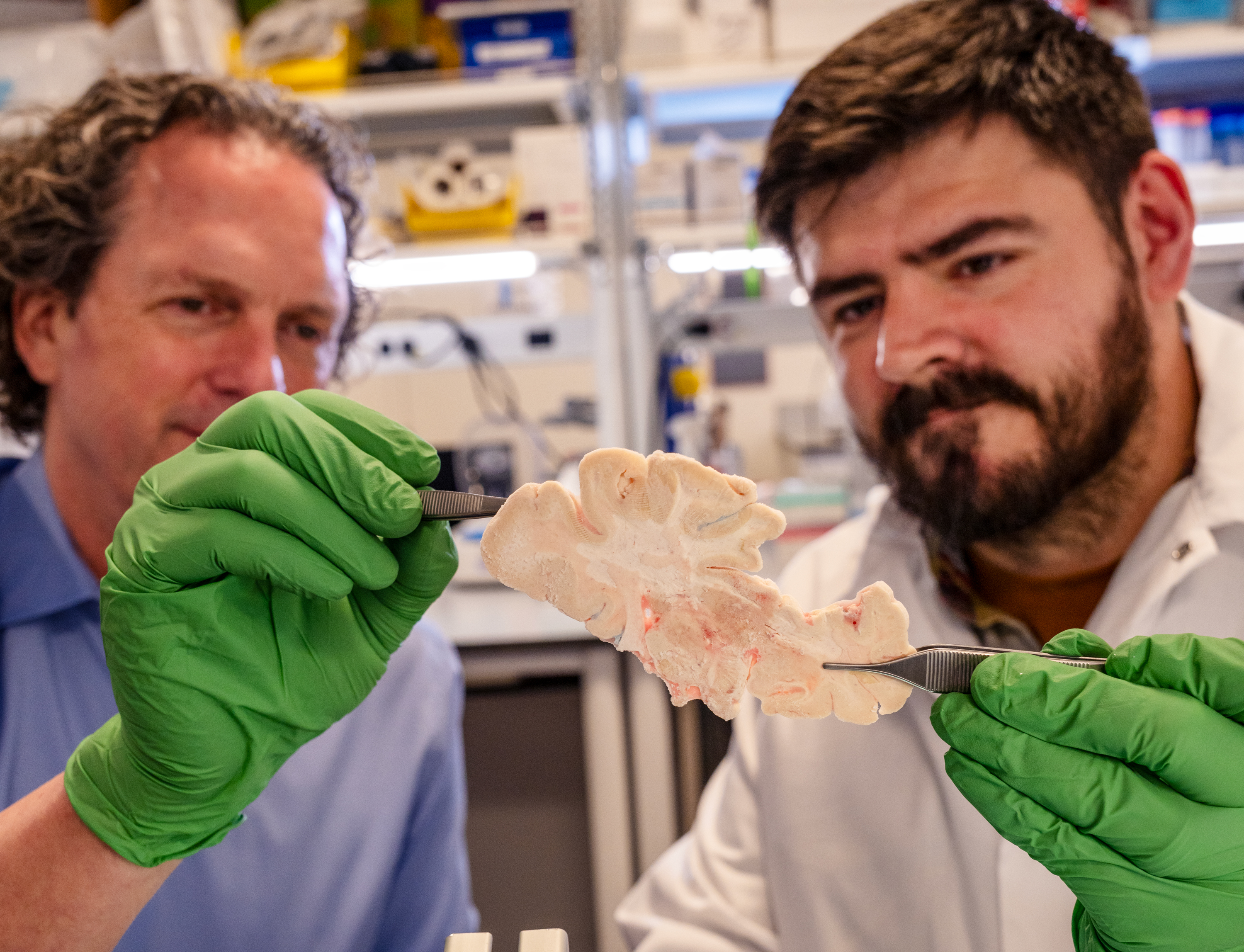
Ed Lein (left) and Aaron Garcia (right) examine a section of human brain in the lab. Photo by Erik Dinnel / Allen Institute.
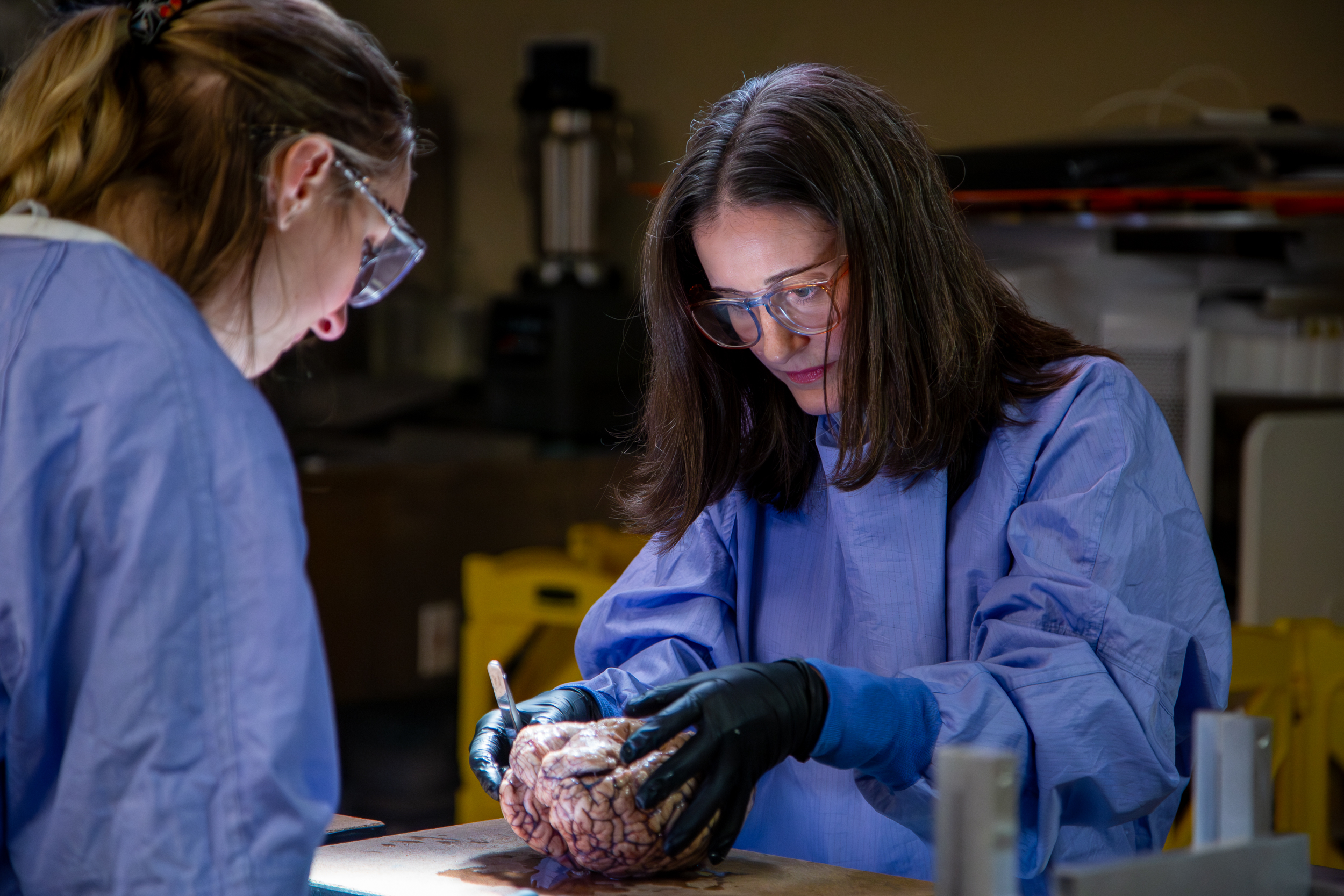
Emily Ragaglia (left) and Caitlin Latimer (right) review human brain tissue that has been donated to support scientific research. Photo by Jenny Burns / Allen Institute.
The global collaborative research initiative will initially target Alzheimer’s, Parkinson’s, Huntington’s disease, and ALS, and Lewy body dementia
SEATTLE, WA, UNITED STATES, June 2, 2026 /EINPresswire.com/ -- The Allen Institute, together with partner organizations, today launched the Brain Health accelerator (Brain Health): an ambitious global research initiative seeking to identify the specific brain cells and circuits affected in neurodegenerative disease and other brain disorders and use that knowledge to accelerate the development of new treatments.One in three people worldwide suffer from neurological or brain conditions; that’s more than 3 billion individuals. 57 million people live with a neurodegenerative disease and there are few effective treatments.
"Brain Health accelerator is a bold and exciting global research initiative to accelerate our understanding and development of therapies for the most pressing brain diseases,” said Rui Costa, President and CEO of the Allen Institute. “It builds on two decades of foundational discoveries at the Allen Institute and brings together academia, industry, nonprofit, and technology partners around the shared goal of tackling one of the greatest public health challenges of our time. I am incredibly excited by the potential of Brain Health to transform neuroscience and advance human health for all."
The Brain Health accelerator is launching with collaboration and partnership from many organizations across science, technology, philanthropy, and disease advocacy. The total commitment to-date is $400M. This includes $200M from the Allen Institute, whose primary supporter is the Fund for Science and Technology; $100M from the Bezos family; and an additional $100M from AWS, NIH, and EverythingALS.
“Brain disease represents one of the great health challenges of our time,” said Mike Bezos, Co-Founder and Chair of The Bezos Family Foundation, leading this philanthropic effort through a personal gift from the family. “The Allen Institute’s Brain Health accelerator brings together the scale, scientific ambition, and global collaboration needed to advance our understanding of neurodegeneration. We are excited to support this effort designed to generate, and share, foundational knowledge that can help scientists pursue new answers—and, ultimately, new approaches to care and potential cures for people and families affected by Lewy body, Alzheimer’s, Parkinson’s, Huntington’s, ALS, and other brain diseases.”
Brain Health also builds on foundational investments from the National Institutes of Health (NIH) BRAIN initiative and the National Institute on Aging (NIA) to support vital brain research and develop cutting-edge technologies and data resources.
What makes Brain Health different
A deeply collaborative model for brain disease research: Brain Health will create a new, hyper collaborative model for brain disease research by bringing together foundational research, computational modeling, and therapeutic development into one cohesive program to accelerate progress for human health.
“The challenge is so daunting, with the most complex organ in the body and enormous variation across the human population, that we need a cross-disciplinary, integrative approach to surface a deep ‘ground truth’ understanding of what happens to our brains as diseases progress,” says Ed Lein, Executive Vice President and Director of Brain Health. “Brain Health will bring together the most cutting-edge technologies applied at scale across multiple diseases, advanced AI-based data modeling, and a radically open science approach aimed at putting those data in the hands of the community and developing therapeutics driven by specificity for safe and effective treatment.”
Focus on cells and circuits: Brain Health will focus on the cells and functional circuits affected in disease. A revolutionary set of technologies known as single cell genomics has created a foundational understanding of the extraordinary diversity of cell types that make up the brain, an accomplishment similar to the Human Genome Project. These technologies now let researchers identify the precise types of cells—and the circuits they form—that are vulnerable to disease. This understanding provides a new paradigm to intervene by targeting those affected cells and circuits rather than molecules or proteins in a general way. “This new approach will lead to precision genetic therapies that are more effective with fewer unwanted side effects,” said Lein.
Human-first, first-in-human: Brain Health will prioritize research using healthy and diseased human brain tissue from the outset. This human-first strategy aims to generate findings that are more directly relevant to human disease and more rapidly translatable into therapies.
“We need to understand the cells and circuits in order to map the human brain and how it’s built,” said Dirk Keene, professor of pathology at the University of California San Diego School of Medicine and leader of Brain Health’s tissue coordinating center responsible for sourcing human brain samples critical to the research. “The only way we can ever really understand how the brain functions is to understand how it’s connected and how those networks are disrupted by disease.”
Reshaping a field: Strength through collaboration
This global collaboration will unite researchers across disease areas to study both the distinct and shared mechanisms underlying neurodegeneration. “It's a false dichotomy to split the diseases apart entirely because they so often co-occur, and we need to understand what happens when they do,” said Lein. By studying multiple diseases together, researchers can find both distinct and shared cellular, molecular, and circuit-level mechanisms.
Research will initially focus on Alzheimer’s, Parkinson’s, Huntington’s disease, Lewy body dementia, and amyotrophic lateral sclerosis (ALS) to create a more holistic, comprehensive understanding of neurodegeneration. In the future, Brain Health may expand its scope to include epilepsies, brain tumors, and neurodevelopmental and neuropsychiatric disorders.
“Brain Health accelerator is an important milestone for neurodegenerative disease. Many neurodegenerative diseases share similar biology, and research on ALS may unlock important discoveries for Alzheimer's, Parkinson's, and frontotemporal dementia,” said Indu Navar, Founder and CEO of EverythingALS. “We're proud to partner with the Allen Institute and we look forward to the day when ALS is curable.”
Brain Health will also bring together neuroscientists, technologists, and computational/AI experts under a single global, collaborative research program to create an end-to-end, discovery-to-therapy pipeline designed to accelerate understanding and progress in treating brain disease.
For more than 20 years, the Allen Institute has championed open science by sharing data, tools, and discoveries openly with the global scientific community. Brain Health extends that commitment with a radically open and collaborative approach that will accelerate research efforts and fuel the scale needed to tackle such a complex challenge—driving science further and faster than any one institution could alone.
Why now? A technological tipping point
Advances in technology through work at the Allen Institute and efforts supported by the NIH BRAIN Initiative have allowed scientists to understand the brain in unprecedented detail thanks to technologies such as single-cell genomics, spatial transcriptomics, and high-resolution imaging. This cutting-edge technology has produced massive amounts of multidimensional data on the brain that is ripe for analysis and rich with insight.
The development of powerful AI systems has made that analysis more accessible and faster than ever. Brain Health will be built for AI from the outset and use artificial intelligence to analyze massive troves of data, surface new hypotheses and insights, and help scientists model neurodegenerative disorders to reveal the underlying “grammar of disease.”
AWS will be a leading technology partner and support Brain Health through cloud storage and infrastructure. "For nearly a decade, AWS and the Allen Institute have worked together to expand data in open science on brain diseases, making world-class neuroscience accessible to researchers everywhere, said Rick Buettner, Managing Director of Global Nonprofits at AWS. “The Brain Health accelerator is the next chapter: translating years of discovery into a cellular-level understanding of diseases like Alzheimer's, Parkinson's, and ALS. We believe this research deserves the same urgency and bold commitment we bring to any grand challenge in science."
“From its inception, the Allen Institute has addressed big questions in neuroscience and taken on scientific challenges that seemed to many of us to be beyond current capabilities,” said John H. Morrison, president of the Society for Neuroscience and UC Davis Distinguished Professor in the Department of Neurology and School of Medicine. “They have now decided to take on the ultimate challenge: to directly translate their foundational insights and approaches to the enhancement of human brain health in a broadly based collaborative effort that will reach across the world. There is every reason to believe that they will succeed.”
Since 2003, the Allen Institute has pioneered a gold-standard model for multidisciplinary, collaborative, big, team and open science that has made Brain Health accelerator a possibility. From mouse to man, it is the culmination of over two decades of work now poised to advance human health for all.
Lizabeth Dueweke
Allen Institute
+1 206-226-0596
email us here
Visit us on social media:
LinkedIn
Bluesky
Instagram
Facebook
YouTube
TikTok
X
Other
Legal Disclaimer:
EIN Presswire provides this news content "as is" without warranty of any kind. We do not accept any responsibility or liability for the accuracy, content, images, videos, licenses, completeness, legality, or reliability of the information contained in this article. If you have any complaints or copyright issues related to this article, kindly contact the author above.
